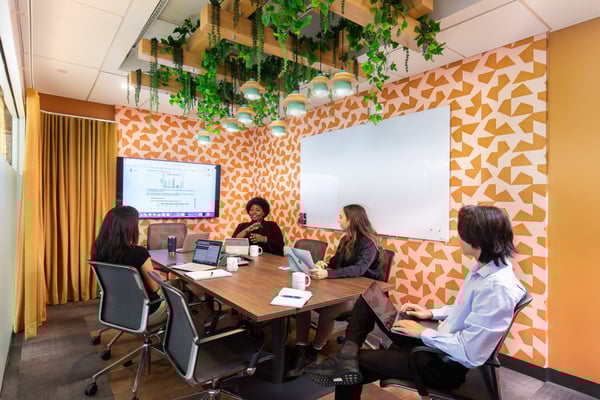
Intentionally designed for working better
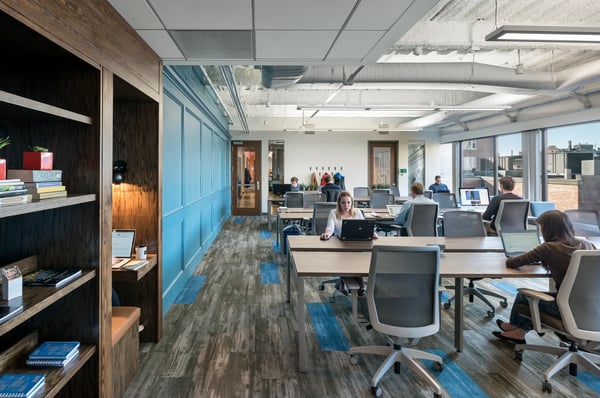
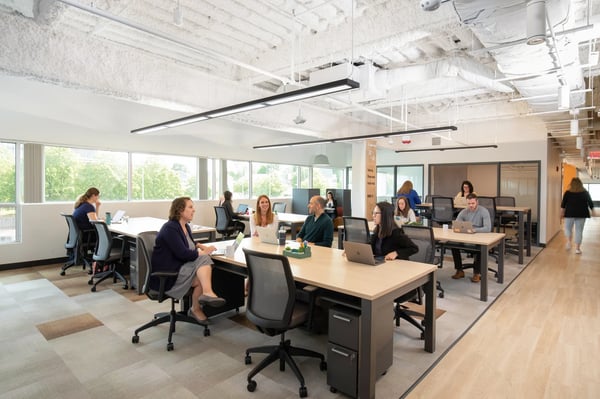
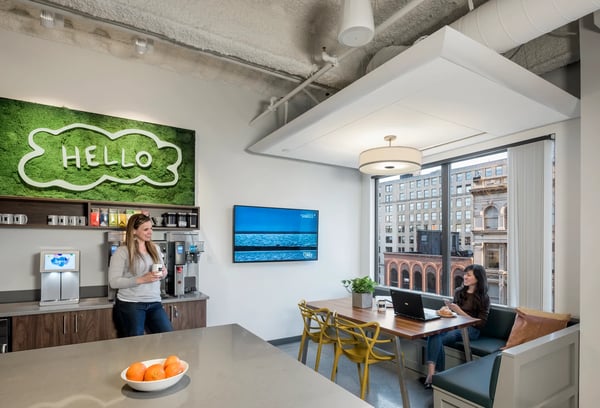
From the furniture you sit on to the way you structure your day, Workbar’s spaces are built for how humans work.
- Activity-based layouts that encourage movement
- Highly adjustable furniture
- Flexible spaces with options for every worker
- Comfortable, human-designed seating
- Easy access to natural light
- Acoustics isolated in phone rooms, offices and meeting rooms.
- Time-sensitive lighting that reduces eye strain and reinforces circadian rhythms
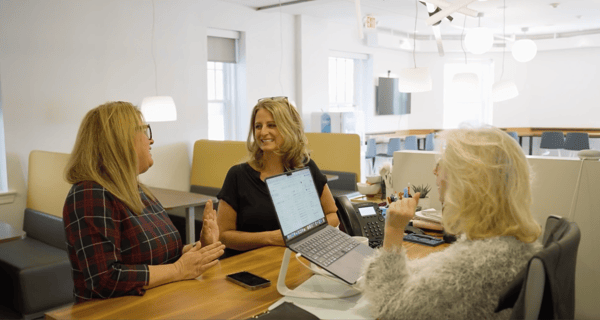
Productivity should feel good
“Ergonomics is the science of fitting the workplace to the worker, not just taking the employee and plopping them into a space.”
Welcome to the Neighborhoods
Humans aren’t designed to sit in the same chair for 8-10 hours a day answering emails. Our bodies (and minds) need to get up and move.
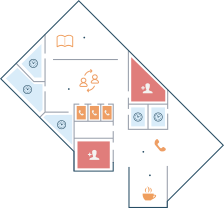
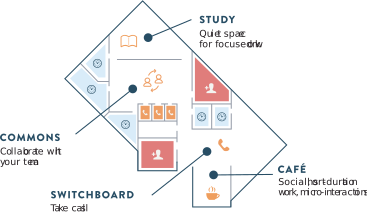
Every Workbar location has four distinct activity-based neighborhoods for different types of work.
“I don’t even want you sitting in the world’s best chair for eight hours straight. I want you to move.”
Welcome to the Neighborhoods
Humans aren’t designed to sit in the same chair for 8-10 hours a day answering emails. Our bodies (and minds) need to get up and move.
The golden ratio of movement throughout the workday
8 MINS
standing2 MINS
walking20 MINS
sitting“If I could wave a magic wand, I would just emphasize that everyone could inject more movement throughout their day.”
Employee-tested, ergonomic specialist-approved
Ergonomic furniture
Standing desks
Adjustable grab n' go monitors
Monitor stands
Sound masking
Biophilia
Diverse patterns & colors inspired by nature
Filtered smart water dispensers
“It shows that Workbar cares about employees who are in the space. It was something I immediately recognized.”
Coworking spaces designed for every way you work
We don’t believe in one-size-fits-all work solutions, and neither do our members. Read what they have to say about working better at Workbar.
Workbar makes you feel like your company is bigger than it is. It’s more than just space—it’s energy, it’s people, it’s opportunity.
Read Case Study
For creative people, you need a space for your creativity to work. I never had that at home, and coffee shops didn’t cut it. Workbar was perfect—it gave us a flow we never had before.
Read Case Study
You walk through the door and you're greeted with a ton of enthusiasm. It's buzzing with additional people who are sharing the space with you, and it's brought our team, from a camaraderie standpoint, even closer.
Read Case Study
Workbar gives us all the possible infrastructure and space and arrangements that we need. So, you know, I can just focus on the work.
Read Case Study
Between the conference rooms, the nearby lunch options, and all of the other great amenities here, being in Workbar has elevated our work experience in a big way.
Read Case Study
The future of working is human-centric
Workspaces should be built around how humans work best. “Back in the office” is not the same as “healthy and productive.” That’s why coworking spaces need to move with humans, not against them
Companies that win care about employees. Companies that care about employees work at Workbar.
Frequently Asked Questions
How does Workbar's office design support activity-based working?
Workbar divides each location into four neighborhoods:
- Study for quiet focus
- Commons for team collaboration
- Switchboard for phone calls
- Café for casual work with background activity
This design is intentional to encourage members to move between spaces throughout the day to promote productivity and healthy working habits.
What ergonomic features are built into Workbar's office design?
Workbar locations include height-adjustable standing desks, ergonomic furniture, adjustable monitors with grab-and-go capability, monitor stands, sound masking in private spaces, and time-sensitive lighting that reduces eye strain.
Or, as Jen Graham, Physical Therapist & Certified Ergonomic Assessment Specialist, says: “Ergonomics is the science of fitting the workplace to the worker, not just taking the employee and plopping them into a space.”
How does Workbar's office design accommodate recommended sitting-standing ratios?
Humans aren’t meant to sit at a desk for 8 hours a day. In fact, the optimal movement pattern is 20 minutes of sitting, followed by 8 minutes of standing, and 2 minutes of walking, repeated throughout the day to reduce musculoskeletal strain.
Workbar’s combination of ergonomic furniture and activity-based neighborhoods encourages movement throughout the workday.
How does Workbar's workspace design reduce work-related injuries?
Musculoskeletal disorders account for 33% of all lost workday injuries annually. Yep, back and neck pain from straining at your desk could be causing you more than just discomfort.
By providing adjustable furniture, encouraging movement between neighborhoods, and incorporating ergonomic principles throughout the space, Workbar’s office design can help alleviate common work-related injuries.
How is the Study neighborhood designed at Workbar?
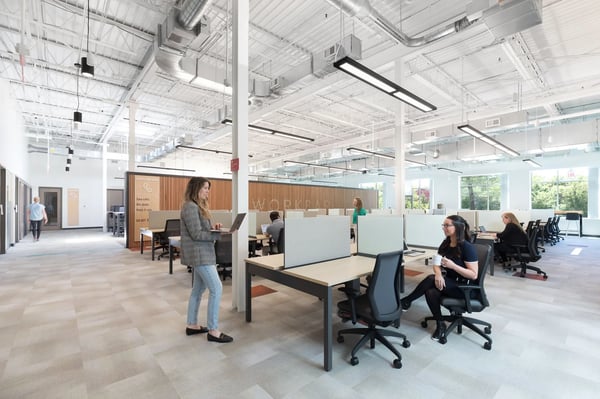
The Study neighborhood is a silent, heads-down workspace designed for deep focus work where members go when they need a quiet area without distractions.
How does Workbar's workspace design accommodate phone calls?
Workbar provides acoustically isolated phone booths, a dedicated Switchboard neighborhood with sound masking, and a Cafe neighborhood where members can make calls regularly without stepping away from a desk or disturbing others.
What productivity benefits does Workbar's standing desk design deliver?
65% of people with height-adjustable desks reported increased productivity and better concentration after one year of use.
How does Workbar's office design incorporate natural light?
Workbar locations provide easy access to natural light and use time-sensitive lighting systems that reinforce circadian rhythms and reduce eye strain throughout the workday.