Carpool CEO: A Call to Action for Boston Leaders

Key Takeaways
-
Work-life balance is the wrong goal. Work and life don’t exist in separate silos; the workplace needs to reflect that reality.
-
Flexibility is essential, not a perk. Where and when someone works shouldn’t be confused with how committed or productive they are.
-
The office has to earn the commute. Coming together should create connection, collaboration, and community — not simply satisfy an attendance policy.
-
Ambition and a life outside of work can coexist. People shouldn’t have to choose between doing meaningful work and being present for the people and things that matter to them.
-
Leaders have to go first. Culture changes when leaders visibly model flexibility and reward outcomes rather than presence.
Every year, I post the obligatory back-to-school photo on Instagram along with the song “It’s the Most Wonderful Time of the Year.” And every year, I feel slightly guilty about it. I love summer with my kids. I really do. But you know what else I love? A schedule. One where everyone knows where they’re supposed to be and when. Summer is wonderful, but it’s also a three-month game of Who Has the Kids? Back to school doesn’t make my life less busy. It makes the chaos more predictable. And as a CEO and a mom, I’ve learned there’s a huge difference.
I don't believe in work-life balance. You can't balance two things that don't exist in silos. I’m a CEO and a mom, and my life only works when those things can coexist. The problem is not that our lives don't fit neatly around work. The problem is that we're still designing work as if they should.
The 9-to-5 (RIP Ms. Dolly) workday was built for another time, when someone else was presumed to be home. Someone else handled school pickup. Someone else took the kids to the doctor. Someone else was there when the plumber came. Someone else made life work so someone else could go to work. But how many of us actually have that someone anymore? And if you do, how do I get one?
Somehow, we're still measuring commitment by when people arrive, when they leave and how often we can see them sitting at a desk. We've changed how we live. We've changed how we communicate. We've changed the technology we use. We've even changed where we work. But we haven't fully changed our definition of work.
Boston leaders, it’s time to evolve.
I believe flexibility is essential. Not a perk. Not a benefit. Not something you earn after you've proven yourself. Flexibility allows talented people to stay in the workforce while also having a life. Which also makes those people better employees.
A 3 p.m. school pickup shouldn't make someone less valuable. Neither should caring for an aging parent. Or going to a doctor's appointment. Or wanting to eat dinner with your family. We've confused when and where people work with whether they're doing great work.
I believe presence is not productivity. Sitting in an office for eight hours is very easy to measure. That doesn't make it valuable. I'd rather know what someone accomplished than how long their laptop was sitting in a particular building.
Leadership is more complex than taking attendance.
I believe people need people. Flexibility doesn't mean isolation. I don't believe the future of work is everyone sitting alone at their kitchen tables talking to their AI robots. We need other humans. We need energy. We need spontaneous conversations. We need places to focus, collaborate, learn, and belong. We just don't need to commute an hour to an HQ five days a week to get them.
The workplace should be where people need it, when they need it.
I believe the office should earn the commute. If you're asking someone to spend an hour getting somewhere, there should be a reason. Not because it's a Tuesday. Not because there's a policy. Because something better happens when they're there. Collaboration. Connection. Mentorship. Ideas. Energy. Community.
The office shouldn't be where work is required to happen. It should be somewhere people want work to happen.
I believe ambition and presence at home can coexist. This one is personal. I don't want my kids to remember that Mom was always working. And I don't want to look back on my career and wonder what I could have accomplished if I'd been more ambitious. I reject the idea that those are the only two choices. I want both. I want other people to be able to choose both, too. That doesn't mean every day is a perfect blend. Some days work wins. Some days family wins. Some days I'm answering an email from a parking lot waiting for carpool. That's not failure. That's life.
The future of work shouldn’t force us to choose which part of ourselves gets to succeed.
And I believe leaders need to go first. We can't tell employees they have flexibility and then quietly reward the people we see sitting at their desks the longest. We can't say family matters and make people feel guilty for leaving at 4:30. We can't tell people to find balance while leaders perform exhaustion as a badge of honor.
Culture isn't what we put in the employee handbook. It's what people see their leaders do.
So I'll keep leaving for carpool. I'll put it on my calendar. I'll talk about it. And then I'll get back to work. Not because I'm less committed to being a CEO. Because I refuse to accept that being a good CEO requires me to be less present everywhere else.
Carpool is just my version of it. Everyone has something. A child. A parent. A relationship. A passion. A community. A life they shouldn't have to put on hold between 9 and 5. We have the technology. We have the workplaces. We have the tools. What's left is leadership.
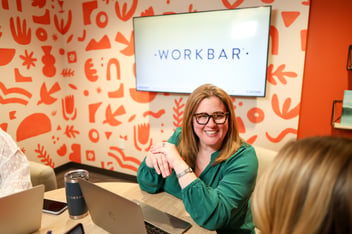
We tell people to bring their whole, best selves to work, and then we design work around the expectation that they hide everything except their work selves. We need to get better at building workplaces where they don’t have to. That’s what I love seeing every day at Workbar, and what I get to experience myself. Starting today I’m spending my Wednesdays back at Workbar Salem. It’s close to my daughter’s school, it works with the reality of my life, and I get to be part of a community that understands and supports both.
That’s what making work work looks like.