Here is a non-comprehensive list of some of the places I’ve worked this year:
- Lacrosse practice sidelines
- Airport lounges
- Carpool pickup lines
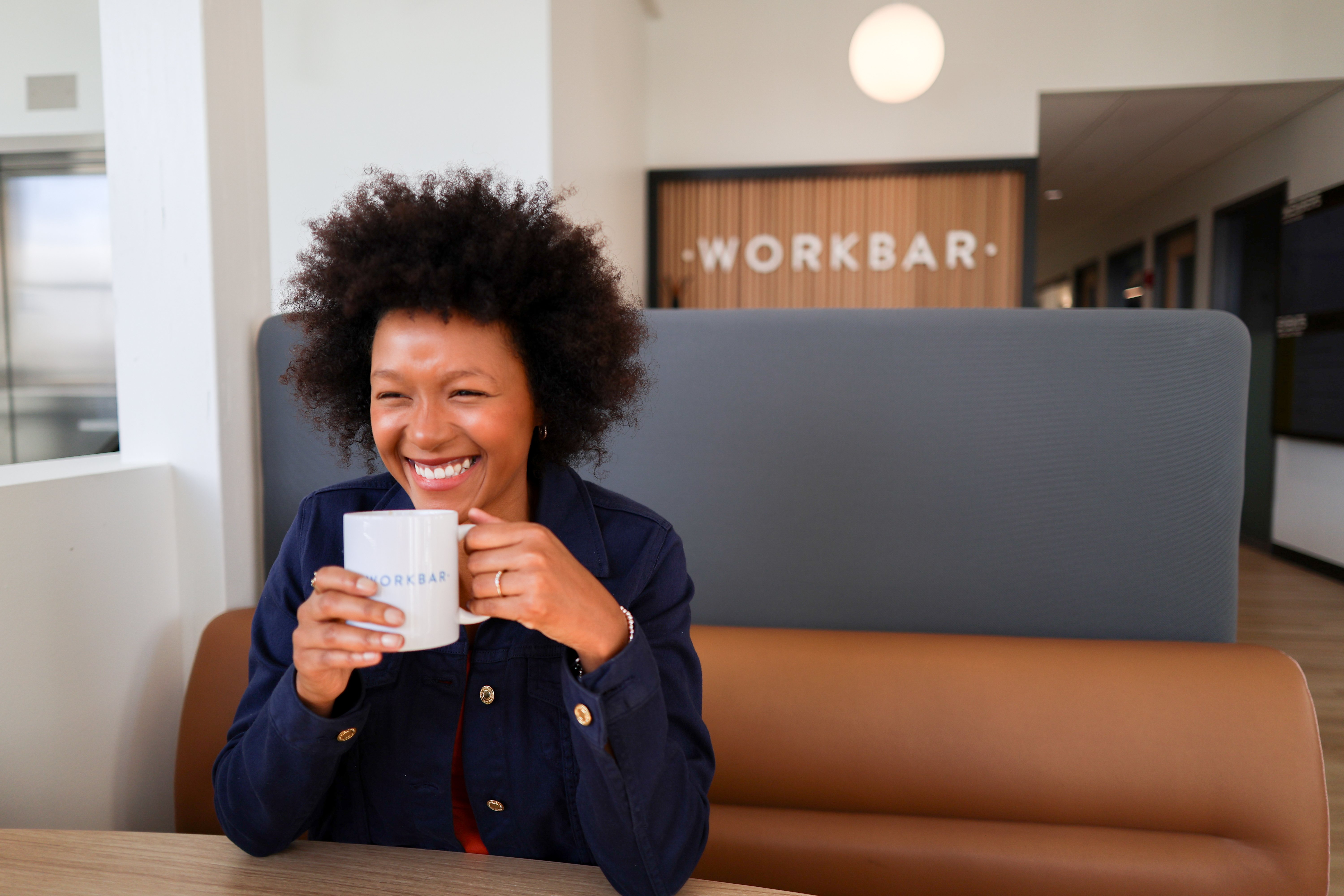
- And, of course, Workbar Arlington, Back Bay, Burlington, Cambridge, Downtown, Framingham, Needham, Quincy, Salem, Woburn, and Worcester.
When I think about work and productivity, I don’t think about sitting in the same office, at the same desk, eight hours a day. I think about flexibility. Zooming out, I’ve noticed this as a wider trend for workers. But what if this shift in how we work this year isn’t just a trend, but a turning point?
As we stare down the barrel of 2026, I’ve been thinking about the trends that shaped work this year, and what to expect in the coming months.
2025 work trends
Trend #1: Hybrid work grew up
2025 is the year that hybrid work matured. In 2020, we saw the global scramble to set up businesses for remote work. In 2021 and 2022, the conversation shifted from WFH to vague return-to-office mandates, followed by better-defined rules in 2023-2024.
According to research from Robert Half, 88% of employers offer at least some hybrid work options, while 25% offer hybrid work to all employees. And on the employee side, hybrid work has become an expectation. 70% of job seekers indicated a preference for hybrid work.
And how are companies meeting the demand? They’re getting more intentional and people-first — and they’re reaping the benefits of flexible work.
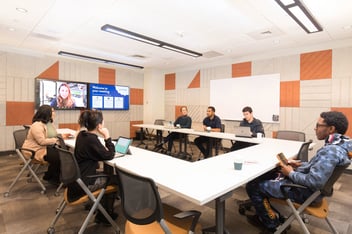
At Workbar alone, we watched 40-person teams spread across Massachusetts finally find a schedule that worked for them:
→ No commute over 20 minutes
→ Predictable 3-day access
→ Purpose-built spaces in Salem, Woburn, Needham, Framingham, Quincy, Worcester
Trend #2: Community in the driver’s seat
When offices and workers are distributed, employees are often left with a community-shaped hole in their workdays. They don’t miss the hour-long commute and standstill traffic, but they do miss the connections made around the watercooler (or, more likely, the coffee maker).
People are seeking connection, not office time. We saw this firsthand with the number of Small Business Grant applications we received, which increased 45% over last year. Businesses and individuals are looking for accessible ways to engage with others while at work.
Trend #3: The Goldilocks effect
The days of expensive office leases are over for many companies. Instead of upsizing or downsizing for unpredictable personnel changes and paying a premium for square footage, businesses are choosing to rightsize their workspaces so they have solutions that are just right.
Consider this: in the first part of 2025, coworking/flexible office spaces were 68% occupied (32% vacant), compared to a 62% rate of occupation in mid-2023.
.png?width=540&height=540&name=FIVE%20LESSONS%202025%20TAUGHT%20US%20(2).png)
What’s next for coworking and private office spaces in 2026?
If 2025 was the year of flexible work growing up. 2026 will be the year of scaling.
Here’s what I see coming:
1. The rise of the “Anchor + Access” model. This model lets companies keep a small home base, but give employees flexible access to regional coworking locations.
2. Suburban locations will dominate. Flexible workspaces should be accessible workspaces, and that doesn’t mean just staying in city centers. This has been building, but 2026 will be the tipping point when we see more workers seeking options in locations like Worcester, Needham, Burlington, Framingham, and Quincy.
3. Caregivers will become a strategic talent pool. Caregivers will demand flexible working options that allow them to show up for board meetings and skateboarding competitions (or whatever else is on the family calendar). Companies that recognize this will have their pick of the best talent.
4. Businesses want workspaces as a turnkey service. Real estate decisions are long, arduous, and expensive — completely at odds with the fast-moving economy. Teams need a friction-free environment with:
- flexibility to rightsize on-demand
- fast onboarding
- predictable pricing
- ready-to-go tech and furniture
- someone else handling everything behind the scenes
The space operator winners will be the ones who think more like hospitality, rather than landlords.
5. Community-first offices will be the winners. The brands that didn’t make a peep in 2025 will regret it in 2026. The successful ones will double down on:
- member events
- partnership programming
- local business support
- purposeful collisions
Because productivity happens anywhere (hello, carpool pickup line!), but community happens somewhere.
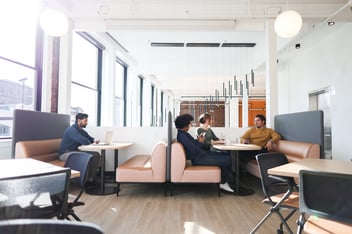
6. The office becomes an experience worth the commute. 2026 will be the year of sensory design, curated zones, activity-based layouts, and spaces that feel energizing, not obligatory. If you want people to come in, you have to earn the commute.
My prediction for 2026
The companies that treat workspace like a product, not a cost center, will have an edge. They’ll design it, measure it, and iterate on it — and continue to put humans at the center of office space design.
Here’s to 2026, a year that builds on everything we learned, pushes us to think bigger, and keeps making work…work.
.jpg?width=352&name=WB_Quincy_0523_web-21%20(1).jpg)