Making Work Work: Introducing Workwell at Workbar
Last week, the Workbar leadership team packed up and headed to North Carolina for our annual management offsite. Every year, we make a point of getting outside Massachusetts, spending a few days together, and working from different coworking spaces along the way. It's an opportunity to step away from the day-to-day and focus on the bigger picture, while also experiencing what other independent coworking operators around the country are doing.
We don’t just tour the spaces, we book meeting rooms and experience the spaces like true members. We take notes on everything from the booking process, how the space makes you feel when you walk in, whether it's easy to focus, or grab a place for a phone call. How do the members interact? Is there space for a team to collaborate?
One space we visited had a wellness room that was the size of a one-person office, with no windows, a small loveseat, curtains, and a sign you could put on the door that said "In Use." Nothing fancy. Just a small, private space where someone could close the door and take a moment for themselves. It was so simple and a good reminder that supporting well-being in the workplace doesn't have to be complicated.
The connection between workspace design and well-being
For years, we've focused on designing workspaces around how people actually work. Our activity-based neighborhoods are a good example. They weren't dreamed up by an architect sitting in an office. They evolved organically from observing how our members used our spaces in the original Workbar back in 2009, and what those people needed to be productive throughout the day.
Rather than expecting people to sit at the same desk all day, we've created different environments for different types of work. Our Café encourages conversation, the Commons supports collaboration, the Study provides space for focused work, and the Switchboard is designed for calls and virtual meetings.
The premise isn’t complicated, the work you need to accomplish should determine where you sit, not the other way around. And what we’ve found is that the benefits of activity-based workspace design extends beyond productivity. Moving between environments encourages movement, creates opportunities for connection, and offers a change of scenery that can give your brain a cognitive spark.
These are small things, but they can make a meaningful difference in someone's workday. And they've led us to think more intentionally about another dimension of workplace design. How can we design spaces not just around how people work, but around how they feel?
Introducing Workwell at Workbar
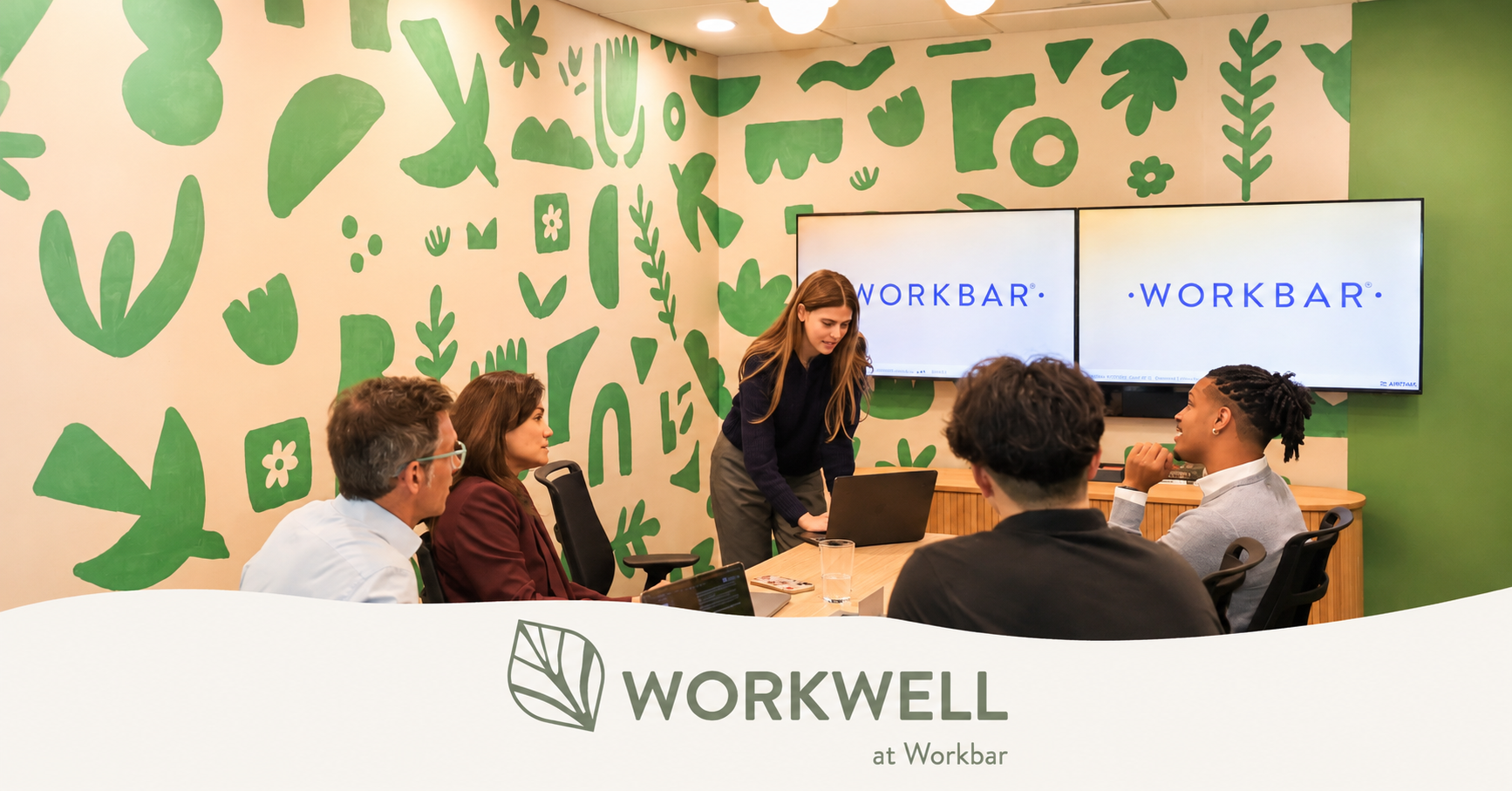
That question is part of what inspired Workwell at Workbar, our new initiative focused on making physical and mental well-being a more intentional part of the coworking experience. It's not about adding a cold plunge or adding amenities for the sake of having more amenities. It's about building on what we've learned about workspace design and productivity to create a healthier workday.
And like many of the best things that happen at Workbar, Workwell grew organically out of our community. Jen Graham, a physical therapist and ergonomics specialist with more than 30 years of experience, originally came to Workbar as a member. Our paths crossed because I work out of Workbar Salem on Wednesdays when I do my daughter’s carpool. Amy, Workbar’s Community Manager, thought Jen and I would have a lot in common, so she made an introduction. What began as conversations about workplace ergonomics evolved into a white paper exploring the relationship between workspace design, movement, and physical well-being. One of the biggest takeaways was how much our everyday work habits matter and how much that has deteriorated post pandemic. Prolonged sitting, poor workstation setup, and a lack of movement all contribute to physical discomfort.
At Workbar, we've always invested in quality ergonomic furniture. It’s something Jen noticed when she first walked into our space. But even the best chair isn't enough if you're sitting in it all day. That's where education and small changes come in. Jen is now joining us as a wellness consultant, helping us select equipment for our wellness room, develop educational materials and ergonomic movement breaks, and introduce programming that encourages healthier work habits.
Sometimes improving workplace wellness is as simple as knowing when to stand up, stretch, change positions, or take a short walk. The goal is to make those choices easier and more natural throughout the workday.
The mental side of workplace wellness
Physical wellness is only part of the equation. Another Workbar member, Alison Campbell, founder and CEO of unBurnt, has been doing fascinating research on burnout and its impact on workplace productivity and innovation.
I first learned more about Alison's work through a Lunch & Learn she hosted for our community. That led to an episode of our Setting the Bar podcast with Alison and Danielle Hartigan, Executive Director of the Center for Health and Business at Bentley University. Their research surveyed 544 professionals across 15 industries and found that 86% reported moderate to high levels of burnout. It also identified a strong relationship between burnout and diminished innovation capacity.
One of the most interesting takeaways for me was that some of your most productive-looking employees may also be experiencing significant burnout. As leaders, we tend to measure what we can see: activity, output, deadlines, and results. But someone can be getting through their to-do list while feeling completely depleted.
Workplace design alone won't solve burnout. But access to quiet spaces, opportunities for movement, social connection, and greater control over how and where people work contribute to a more supportive environment. Alison will also be collaborating with us on Workwell, bringing her expertise in burnout and mental well-being into the conversation.
Creating the conditions for better work
One of my favorite things about Workwell is how it came together. Neither of these collaborations started with us searching for a wellness vendor. They started with members of our community. Through everyday conversations and community programming, we discovered opportunities to work together.
You can't manufacture an organic partnership, but you can create the conditions for one to happen. That's one of the things I love most about coworking. When you bring people with different backgrounds and expertise together, opportunities emerge that might never have happened otherwise. And in this case, those relationships are helping us create something that benefits the broader Workbar community.
I keep coming back to that little wellness room we saw in North Carolina. A loveseat. A closed door. An "In Use" sign. It wasn't overly sophisticated, but it acknowledged something important, people occasionally need a moment away from their work, and the workplace should make room for that.
As we introduce Workwell, we're building on that same philosophy through thoughtful spaces, ergonomic education, movement, and partnerships that support physical and mental well-being.