
Growth Does Not Equal Demand. Making Work Work, CEO Series Vol. 17
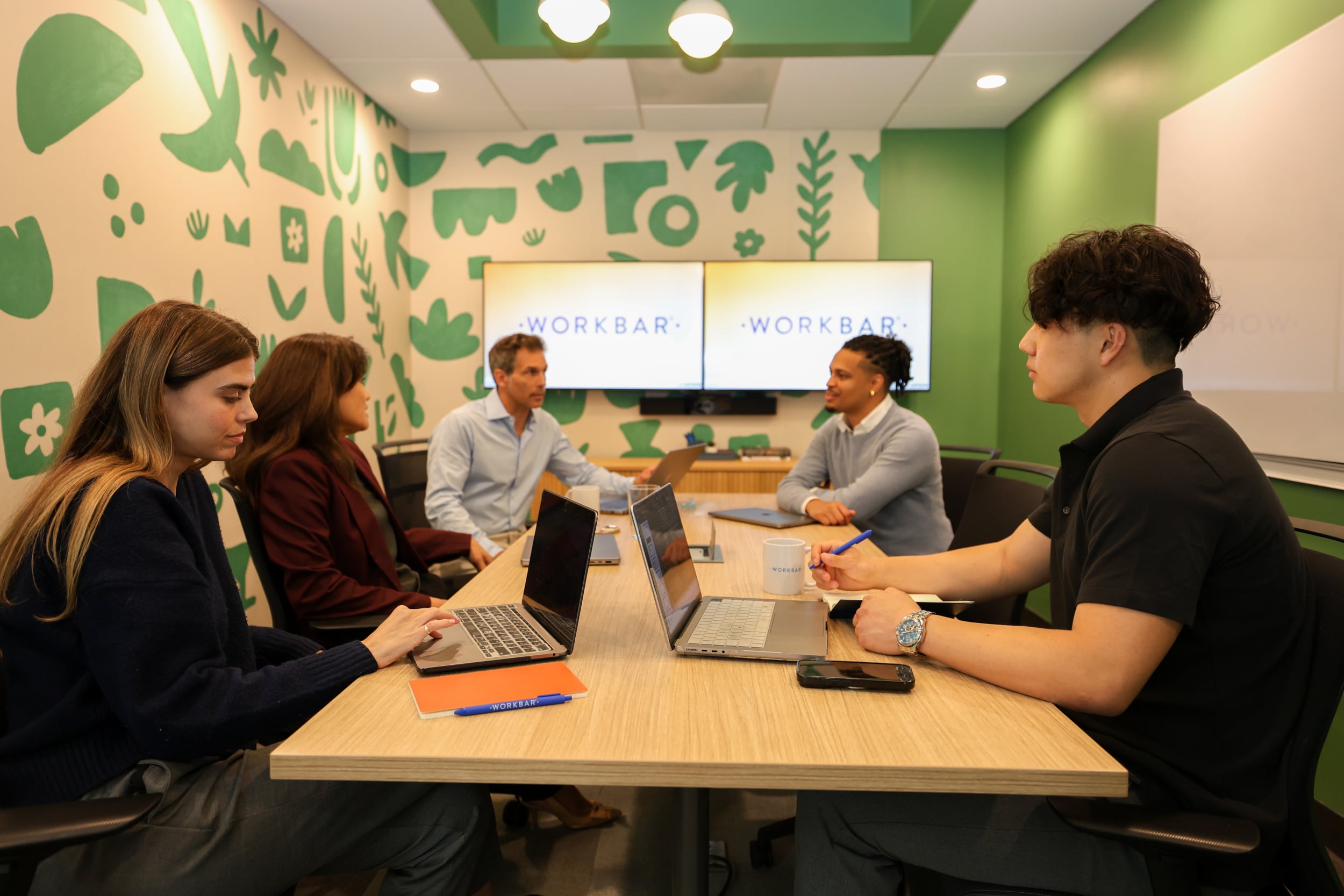
A bigger coworking footprint doesn’t necessarily mean coworking is doing well. When we recently announced that Workbar was expanding our Back Bay location, a reporter asked me a pretty straightforward question: “Is this a good sign for coworking?” My answer was: It’s a good sign for Workbar and our brand of coworking. I’m not willing to speak for the rest of the industry.
There’s an important distinction between growth and demand, and I think we confuse the two far too often in coworking. I see operators planting flags in cities across North America. New market. New building. New location. New logo on a map. That tells me a company wants a bigger footprint. It doesn’t necessarily tell me their customers are asking for it.
At Workbar, we grow differently. We don’t plant flags. We grow where we have proven demand. Our Back Bay expansion wasn’t about deciding we needed more square footage in Boston. We had members who needed more space. We had demand we couldn’t accommodate. We had a location that had been telling us, through its performance, that it was time to grow. That’s a very different growth strategy. And I think it’s one reason our brand of coworking is working.
A network is more valuable than a collection of locations.
People don’t just want access to a coworking space. They want access to the right workspace based on where their day takes them. That’s why open reciprocity across our regional network matters so much. Work near home today. Meet someone in Boston tomorrow. Work somewhere else between appointments the next day. The value isn’t just the individual location. The network is the product. And I think regional density matters much more than dots scattered across a national map.
Coworking should actually be designed for work. This sounds painfully obvious, but I’m not sure the industry always agrees. A lot of coworking still looks like a hotel lobby surrounded by private offices. Beautiful? Sure. Productive? Not necessarily.
We’ve spent years designing Workbars around how people actually work. We have different neighborhoods for different activities: quiet work, collaboration, calls, meetings and social interaction. Walls should exist because the activity on one side of them conflicts with the activity on the other, not because walls allow you to sell another private office so teams stare at the same white walls day in and day out. I think the coworking space of the future has far fewer walls than the coworking space of today. When we were designing Workbar Downtown in 2018, I decided we didn't need a front desk. My thinking was that our Community Manager shouldn’t be sitting behind a reception desk. She should be out in the coworking neighborhoods, working alongside members and being part of the community. It lasted about a week. Nobody could find her. And, understandably, she wanted a home base. So we put the desk back.
But I still believe the instinct behind that decision was right. We should be questioning every convention we've inherited from traditional offices, hotels, and first-generation coworking. Why is there a reception desk? Why is there a wall here? Why are we building so many private offices? Why does coworking space so often look like a hospitality space? Does any of it actually help someone have a better workday? Because that’s the test. Most coworking is still being built for the past.
The future of coworking isn’t about squeezing more offices into a floorplan, making the lobby more Instagrammable, or making sure the elevator music matches the bathroom music. It’s about understanding how people work now. People move around. They work closer to home. They need quiet for one hour and collaboration the next. They need somewhere to take a call without annoying everyone around them. They need professional space without committing to the same desk, office, or commute five days a week.
That requires a fundamentally different product. So, is Workbar's Back Bay expansion a good sign for coworking? Maybe. But I know what it tells me about Workbar. People are using the product. They’re finding value in the network. They’re choosing spaces designed around productivity. And when they tell us through their behavior that they need more of it, we build more. That’s not planting a flag. That’s following demand. And I think that distinction is going to matter a lot as we figure out which version of coworking actually belongs in the future of work.
.jpg?width=352&name=1O6A3475%20(1).jpg)
.jpg?width=352&name=Workbar_ss_10%20(2).jpg)