Making Work Work: I Love Fenway. I Don’t Want to Work There. Making Work Work, CEO Series Vol. 16
There’s a new coworking space near Fenway Park, and its ballpark-themed office keeps showing up all over my social media feed. Every time I see it, I get irrationally annoyed. I understand why the non-Boston coworking company behind it thinks it might draw people in. It’s fun. It photographs well. It was practically designed to show up on social media.
But I also think it represents something our industry needs to be careful about: confusing a cool place to visit with a great place to work. For years, the coworking industry tried to make offices more appealing by making them more fun. Ping-pong tables. Beer taps. Game rooms. Nap pods. Slides. Spaces designed as much for Instagram as for actual work.
I know I’ve told this story before, but when I was interviewing for a new job in 2017, I met with a New York startup at a coworking space across from South Station. There I was, waiting for my interview in the reception area, sitting on what can only be described as an adult swing set, because apparently someone had decided swings were appropriate office furniture. That person never had to remove themself from the swing to shake the hand of the person interviewing them.
Then came the pandemic. People proved they could work from almost anywhere. More importantly, they became much more intentional about when and why they were willing to leave home and come together. And yet, sometimes it feels like our industry's answer is still: Maybe the office just needs to be more fun.
Simply put, no.
Designed for the People, or Designed for the Designer?
I remember taking our marketing team to a coworking conference years ago. One night, there was a cocktail party at another coworking space. We walked in and my team immediately started oohing and aahing. The space was beautiful. They were pointing out the furniture, the finishes, the lighting fixtures, all the things you notice when you first walk into a space.
Then someone asked me what I thought. I shrugged my shoulders. "It's beautiful. But I couldn't work here." They looked at me like I was crazy. So I started pointing things out, and then I couldn’t stop. The non-ergonomic wooden chairs no one could comfortably sit in for more than an hour. The abundance of soft seating that looked great but wasn’t actually useful for working. The marble countertops that would bounce every conversation across the room. No outlets. No place for calls. No acoustic privacy. No place to collaborate without disrupting everyone around you. Glass office doors with no door sweeps or gaskets.
It was a beautiful space. It just wasn’t a productive one. They looked at the space completely differently. They had been so dazzled by what it looked like that they hadn't stopped to think about what it would actually feel like to work there every day.
And that's when I said something I still think about when we're designing a Workbar: “This space was designed for the designer. It wasn't designed for the people working in it. There's a big difference.”
The Best Workplace Design Is Often Invisible
Of course I care about how Workbar looks. But that's the surface. It’s the easy part. The things I spend the most time and money thinking about are things our members may never consciously notice.
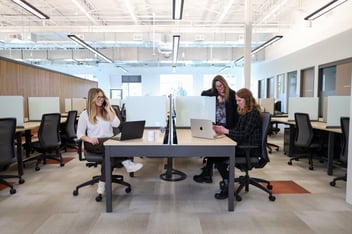
The acoustics. The sound masking. The air quality. The lighting temperature. The connectivity. The access to natural light. The distance between desks. How sound travels from one part of the space to another. Where walls need to go all the way to the deck. Where we need additional acoustic insulation or treatments. What happens to the noise level when the space is actually full, not when it's empty and being photographed.
None of those things are particularly Instagrammable. Nobody walks into Workbar and takes a selfie with the acoustic insulation. But you absolutely notice when those things are missing. You hear someone else's conversation when you're trying to concentrate. You can't find anywhere to take a call. The Wi-Fi drops in the middle of an important meeting. The room feels stuffy after an hour. You're constantly distracted by what's happening around you.
You leave at the end of the day exhausted without necessarily knowing why. You can photograph design. Productivity is something you have to experience. That's why we design around what someone is actually trying to accomplish throughout their day. Nobody works the same way for eight straight hours. You might start with an hour of heads-down work. Then you have a Zoom call. Then you need to grab a colleague and work through something together. Then lunch. Another call. Maybe a team meeting. Then you desperately need 45 uninterrupted minutes to finish something before you leave.
Those activities require different environments. So we build different environments. Our Study is designed for focused work. The Commons is designed for collaboration. The Café is social. Our Switchboard gives people somewhere to have conversations (yes, even with their AI companion) and take calls without disrupting everyone around them.
You move through the workplace based on what you're trying to accomplish. That is what intentional workplace design means to me. And when we've done it correctly, you probably don't even notice most of it. You just know you got a lot done.
Intentional Doesn't Mean Boring
This is where I think the conversation gets oversimplified. I'm not arguing that workplaces shouldn't be beautiful. They should be. I'm not arguing that they shouldn't have personality. They absolutely should. And I'm certainly not arguing that people shouldn't have fun at work.
But fun is not a workplace strategy. If you're asking someone to leave the comfort of their home, commute to an office and spend part of their day there, the bar is much higher than this looks cool. The space has to help them do something better. Focus better. Collaborate better. Meet better. Connect better. Think better. That's what I mean when I say the office has to earn the commute. And that doesn’t mean looking like my eight-year-old’s Fenway Park-themed bedroom.
Building a Place for Teams to Actually Get Something Done
And this matters even more when you're designing a space specifically to bring teams together.
Our Conference Center at Workbar Needham is a good example. When we designed it, we weren't asking ourselves what would get us the most likes on Instagram. We were asking what actually happens when a company decides to bring a team together for a full day.
Because getting 20, 30 or 40 people together is a big investment. People are clearing their calendars. They're driving. Some may be traveling. You're taking an entire group away from whatever else they could be doing that day. That day should accomplish something. So the environment has to support it.
People need to be able to see and hear each other. They need technology that works. They need places to break into smaller groups. They need whiteboards and room to work through ideas. They need somewhere to take a private call. They need to move around. They need coffee and lunch and places for the conversations that happen between the scheduled sessions, which are often just as valuable as the sessions themselves. And sometimes, in the middle of an offsite, someone needs 30 minutes to go somewhere quiet, open their laptop and actually get some work done.
That's why our Conference Center isn't just a big conference room. It's part of an entire workplace ecosystem. And we're seeing some really interesting Boston companies use Needham exactly that way, for leadership offsites, workshops, strategy sessions, planning meetings and company gatherings. They're not coming because we built them an adult playground. They're coming because they need to get something done. And sure, maybe they go catch a game at Fenway afterwards.
September Is When Next Year Starts
And right now, there's one reason we're seeing more companies think about exactly this: it's September. September has always felt like the beginning of the end of the year to me. Maybe it's the back-to-school mentality. Summer ends. Vacations slow down. Everyone comes back. Calendars suddenly fill up again. And as a CEO, once September hits, I basically look at the year and think: Okay. 2026 is behind us. What are we doing in 2027?
Yes, I realize there are technically four months left. But this is when next year starts in our world. Budgets are being built. Strategies are being debated. Goals are taking shape. Leadership teams are looking at what worked, what didn't and what needs to change. It's also why September through November is such an important time to get your team together. Not for another weekly meeting. And definitely not because you need to lure them there with an adult swing set. Bring them together because there is something you need to accomplish together. What did we get wrong this year? What did we get right? What has to happen in 2027? Those conversations deserve a space designed for them.
The Office Has to Earn the Commute
The pandemic didn't eliminate the need for the office. It raised the bar for it. People don't need us to give them a desk and Wi-Fi anymore. They have that. Our job is to create environments that help them do things they can't do as effectively sitting alone at home.
Sometimes that's focused work. Sometimes it's collaboration. Sometimes it's connection. And sometimes it's getting 30 people in a room in September and figuring out what the company is going to do in 2027. That's the opportunity I think our industry should be obsessed with. Not creating increasingly elaborate ways to make an office photograph well. Creating workplaces that make people better at what they came there to do.
The future of work isn't another ping-pong table. It isn't an adult swing. And it probably isn't a Fenway-themed office. People aren't coming to the office because they need a cool place to work. They're coming because, on the right days, for the right reasons, there are things they can do better there.
Our job is to make those days worth the commute.
.jpg?width=352&name=WB_Quincy_0523_web-21%20(1).jpg)